
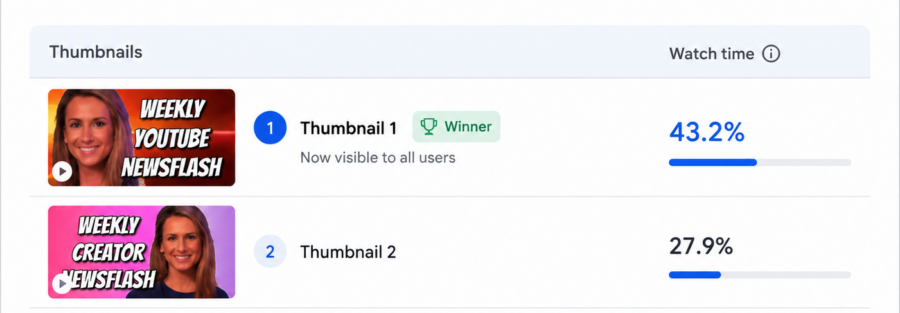
YouTube has begun rolling out a new Thumbnail Test & Compare feature that enables creators to test multiple thumbnail designs before deciding which one performs best. The new tool is designed to help creators make data-driven decisions that could improve watch time, click-through rates and overall channel growth.
Initially available to a limited group of creators, the feature is expected to become more widely accessible in the future.
Test Multiple Thumbnails Before Choosing One
The new testing tool, available within YouTube Studio, allows creators to upload up to three different thumbnail designs for the same video.
Instead of relying on guesswork, YouTube will display each thumbnail to different groups of viewers and compare their performance automatically.
Once enough viewing data has been collected, YouTube identifies the strongest-performing thumbnail based on viewer engagement.
Watch Time Is the Key Performance Metric
Unlike traditional A/B tests that often focus on click-through rate (CTR), YouTube’s new system places greater emphasis on Watch Time.
This means the platform evaluates not only which thumbnail attracts more clicks, but also which version leads to viewers spending more time watching the video.
By prioritising viewer retention rather than simple clicks, creators can optimise their content for long-term channel growth instead of short-term curiosity.
Why Thumbnails Matter
A thumbnail is often the first thing viewers notice when browsing YouTube.
An effective thumbnail can significantly improve a video’s visibility by encouraging users to click, while a poorly designed image may reduce performance regardless of the quality of the content itself.
Successful creators frequently invest considerable time refining thumbnail designs because they understand their impact on audience behaviour.
Common characteristics of high-performing thumbnails include:
- Clear, eye-catching visuals.
- Strong facial expressions or emotional reactions.
- Easy-to-read text.
- Bold colours and contrast.
- Images that accurately represent the video’s content.
The new testing feature allows creators to determine which approach resonates most with their audience.
A More Scientific Approach to Content Optimisation
Until now, many creators have relied on intuition, experience or manual changes after publication to improve thumbnail performance.
The new Test & Compare tool introduces a more analytical process, allowing creators to base design decisions on real viewer behaviour rather than assumptions.
This provides valuable insights that can also influence future thumbnail strategies across an entire channel.
Currently in Limited Beta
YouTube has confirmed that the feature is initially being released to a small number of creators as part of a beta programme.
The company plans to expand availability gradually after gathering feedback and refining the testing process.
Thumbnail testing has long been one of the most requested features from the creator community, making this rollout an important milestone for YouTube Studio.
What This Means for Creators
For creators seeking to improve channel performance, thumbnail optimisation remains one of the most effective ways to increase visibility.
The new testing feature can help creators:
- Improve viewer engagement.
- Increase watch time.
- Make better-informed creative decisions.
- Reduce reliance on guesswork.
- Build stronger long-term content strategies.
Rather than choosing a thumbnail based purely on personal preference, creators can now rely on real performance data to identify which design delivers the best results.
Looking Ahead
As competition on YouTube continues to grow, small improvements in presentation can have a significant impact on a video’s success.
The introduction of Thumbnail Test & Compare demonstrates YouTube’s continued investment in creator tools that support smarter decision-making and stronger content performance.
Once the feature becomes widely available, creators of all sizes will have access to valuable analytics that can help maximise audience engagement and improve overall channel growth.