
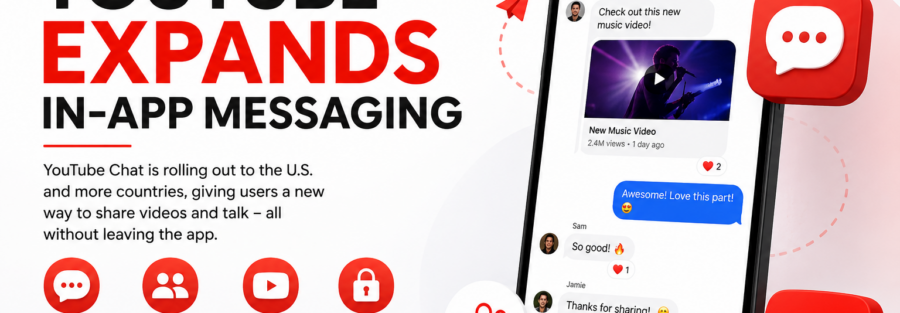
YouTube is rolling out a wider release of its in-app messaging feature, giving users a new way to share videos and communicate without leaving the platform. The move reflects YouTube’s ongoing efforts to strengthen user engagement and keep more interactions within its ecosystem.
A New Way to Share Content
The messaging feature, known as YouTube Chat, allows eligible users to exchange private messages and discuss content directly within the YouTube app. Instead of sending links through third-party messaging platforms, users can now share videos, Shorts, tutorials, and other content through dedicated chat conversations.
The feature was initially tested in select markets, including Ireland and Poland, where YouTube gathered feedback from users before expanding availability to the United States and several other international regions.
How YouTube Chat Works
Users can start a conversation by sending an invitation to another person within the app. Once the invitation is accepted, both users can exchange messages, share videos, and react to content in real time.
The process is designed to create a more seamless viewing and sharing experience by allowing conversations to take place where the content is being consumed.
Whether users are discussing the latest music release, a trending Short, or an educational tutorial, YouTube aims to make content sharing more convenient and interactive.
Why YouTube Is Investing in Messaging
The expansion highlights a broader trend across social media platforms. Increasingly, users are moving conversations away from public feeds and into private messaging channels where discussions feel more personal and direct.
By introducing its own messaging functionality, YouTube hopes to:
- Increase user engagement within the platform.
- Encourage more content sharing without relying on external apps.
- Improve audience retention.
- Gain deeper insights into how videos are discovered and shared.
- Create stronger communities around creators and content.
For content creators and brands, this could potentially lead to greater visibility as videos are shared directly between users inside the YouTube environment.
Will Users Adopt Another Messaging Platform?
While the feature offers convenience, one challenge for YouTube is convincing users to adopt another messaging channel when many already communicate through established platforms such as WhatsApp, Messenger, Telegram, and other social apps.
Despite this, YouTube reports that early testing generated encouraging feedback, suggesting there may be demand for a messaging experience that is closely integrated with video content.
What This Means for Creators and Businesses
The introduction of expanded in-app messaging could provide creators with additional opportunities to increase audience interaction and encourage organic content sharing. Videos that spark conversations may benefit from increased exposure as users recommend and discuss content directly through YouTube Chat.
As the platform continues to evolve beyond traditional video hosting, features such as private messaging demonstrate YouTube’s ambition to become a more complete social and community-driven platform.
Creators, brands, and digital media businesses should monitor the rollout closely, as it may influence future audience engagement strategies and content distribution opportunities.