Not all ad impressions are equal, and in TikTok’s latest research report, created in conjunction with Ebiquity, it aims to highlight how different measurement approaches can have a significant impact on your ad assessment, and help to guide you towards the best value-for-money ad approaches for your business.
The report analyses data from a range of major U.K. brands, in order to ascertain exactly how different ad approaches contribute to sales. Ebiquity says that this is based on “econometric analysis” which isolates TikTok’s incremental contribution to sales, separate from other marketing activities.
So rather than approaching the analysis with a strict measurement goal in mind, based on traditional ROI, the analysis seeks to understand the true value of each ad type, and how they contribute to sales.
As per TikTok:
“For too long, ROI has been treated as the be-all and end-all. In reality, it is just the starting point. A high ROI from cheap inventory can mask a lack of actual sales uplift, while a lower ROI on premium formats might be driving the breakthrough impact a brand needs to grow.”
So, in other words, TikTok’s trying to show that its more expensive ad slots are actually better value for money.
Which is obviously better for TikTok, as it will see more brands spending more on its bigger ad offerings, but the data presented here supports the idea that bigger impact ad formats can have a bigger impact.
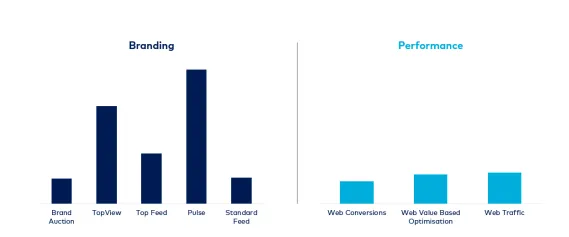
Indeed, according to the report, TikTok’s premium formats, like TopView and Pulse, deliver higher revenue per impression versus standard ad formats.
As per the report:
“TopView and Pulse generated 3 – 4x the revenue per thousand impressions compared to Brand Auction. TopFeed delivered 2x the impact at roughly 2x the cost. Brand Auction and Standard Feed delivered volume. Premium formats delivered impact. Which one you need depends on your objective.”
So, depending on what you’re looking to achieve, spending more on TikTok’s more standout ad formats can have a bigger return, though it is relative to your specific aims.
The report further notes that engagement is key, with average play duration having a direct correlation with revenue per thousand impressions.
So rather than looking at reach, if you’re trying to drive direct revenue results, engagement is critical, and the report provides some key tips for engaging TikTok ad content:
Ensure ads are kept under 25 seconds
Show the brand identity within the first 2 seconds
Create/adapt content that fits the platform naturally
Ads that entertain or have an emotional impact and create a hook early drive stronger attention and recall.
So what’s the TL;DR of all this?